Cuba's energy sector is one of the most structurally damaged economies in the Caribbean. When a free Cuba emerges, it will not be patching a functioning grid. It will be building a new one from near-zero. That moment creates one of the most consequential clean energy investment opportunities in the Western Hemisphere, and the domains that anchor the digital layer of that opportunity are what this post covers.
Cuba Strategic Partners owns all of the domains discussed in this post and has a direct financial interest in their leasing and acquisition. This content is written from that position of ownership, not from a neutral third-party perspective.
Cuba Strategic Partners holds a clear and non-negotiable position: we support only a free Cuba. We do not engage with, negotiate alongside, or structure any investment that benefits or legitimizes the current communist regime or any successor that preserves its power. Every asset in this portfolio is positioned exclusively for the Cuba that comes after.
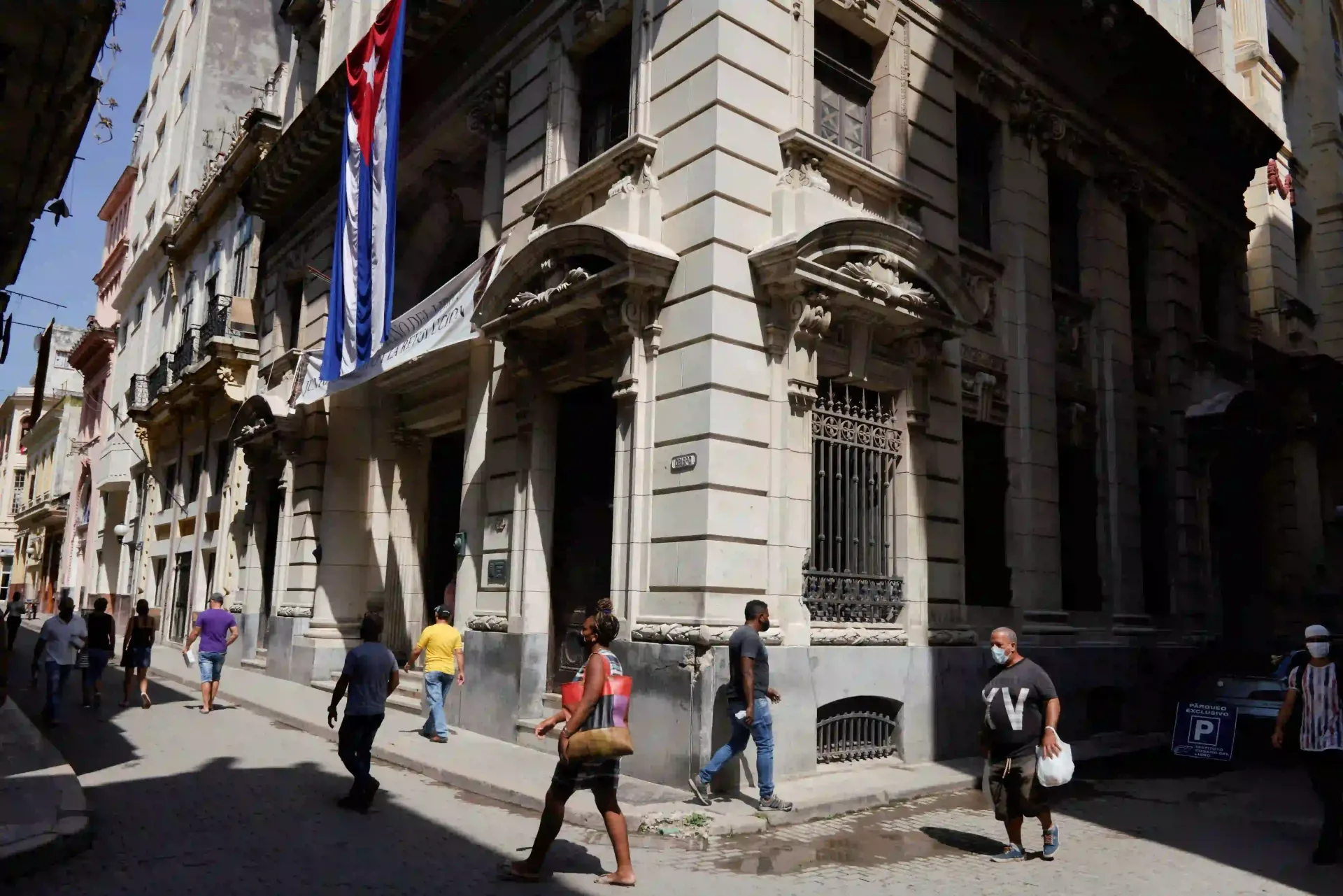
Cuba renewable energy is not a long-term abstraction. The country's current electricity infrastructure has collapsed to a degree that makes outside observers uncomfortable putting numbers to it. The Cuban government's own blackout schedules, reported in 2023 and 2024 by Reuters and the Associated Press, described rolling outages lasting 16 to 20 hours per day across multiple provinces. According to the International Energy Agency , Cuba's installed generating capacity remains heavily dependent on aging oil-fired thermal plants, many of which are decades past their operational design life. A free Cuba rebuilding its energy sector would do so with essentially no incumbent infrastructure worth preserving, which means solar, wind, and distributed grid architecture become the rational first-build choice, not an ideological preference.
The full portfolio of Cuba energy infrastructure domains is listed at cubastrategicpartners.com/domains.
Table of Contents
- The Cuba Renewable Energy Sector Opportunity
- cubarenewable.com: The Category Anchor
- cubasolar.org: Solar-First Development Infrastructure
- cubasmartgrid.com: The Grid Intelligence Layer
- antillasolar.com: Regional Brand for the Antilles Market
- cubaminigrids.com: The Distributed Energy Play
- The Digital Bridge Connection
- Three Takeaways and Next Steps
The Cuba Renewable Energy Sector Opportunity
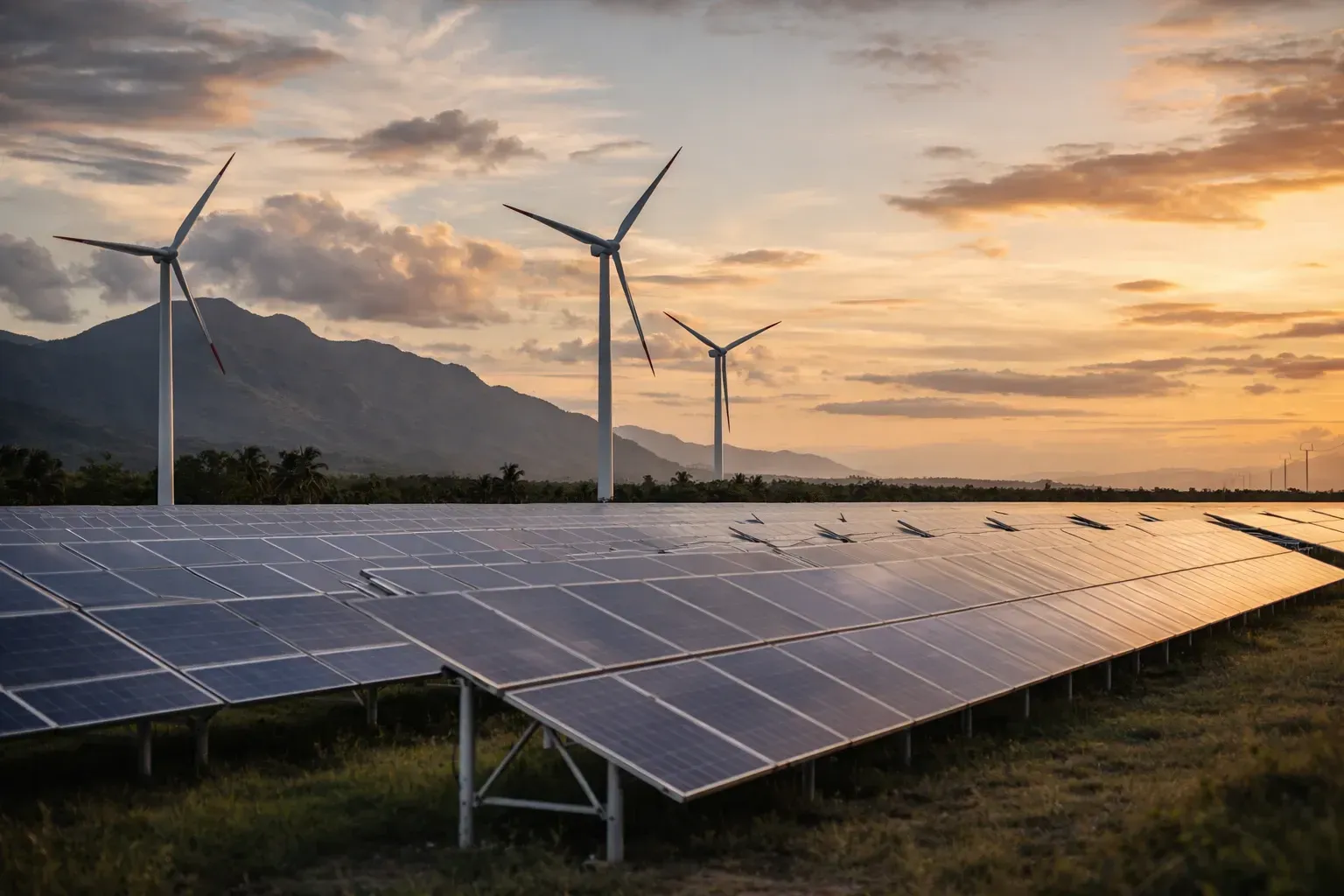
Cuba sits at roughly 22 degrees north latitude, in the Caribbean solar belt. According to the World Bank's Global Solar Atlas, Cuba receives average horizontal irradiance comparable to Florida and exceeding most of Spain, two countries with rapidly scaling solar industries. The land area, roughly 110,000 square kilometers, provides substantial surface for utility-scale solar deployment, and the island's geography creates natural corridors for wind resources along the northern and southern coasts.
The Caribbean Development Bank and the Inter-American Development Bank have both published assessments of Caribbean energy transition costs and timelines. Our analysis, drawing on comparable island-nation transitions in Jamaica, the Dominican Republic, and Barbados, suggests that Cuba's per-capita energy rebuild cost in a post-transition scenario would be measured in the tens of billions of dollars over a ten to fifteen year period, with the first phase concentrated in distributed solar, battery storage, and smart grid management. That is the market these domains are positioned to serve.
The structural advantage worth naming directly: Cuba does not have embedded independent cartel or organized crime infrastructure of the kind that complicates energy project financing and execution in parts of Mexico, Honduras, and Ecuador. For investors evaluating project risk in Caribbean and Central American energy markets, that absence is a material consideration.
cubarenewable.com: The Category Anchor
cubarenewable.com is the single most direct category-match domain for Cuba's renewable energy sector. The phrase "Cuba renewable energy" is the natural search term for investors, developers, project financiers, and policy researchers entering this market for the first time. The domain captures that intent at the root level, before any operator or platform brand is established.
The operator profile here is a utility developer, an international energy firm, or a development finance institution standing up the first serious renewable project finance platform for Cuba. Think of the role that platforms like ENGIE's project portals or Enel Green Power's country landing pages play in markets they enter. cubarenewable.com occupies that same positioning for Cuba's market entry moment, except it is available before that moment arrives rather than contested after it does.
Brand equity is strong. Two words. Exact category match. No ambiguity about what this domain is for. In search terms, Cuba renewable energy is the anchor phrase around which an entire content and investment ecosystem can be built. Leasing this domain to a renewable energy developer entering Cuba on day one of market opening positions that operator immediately as the category authority.
cubasolar.org: Solar-First Development Infrastructure
cubasolar.org carries the .org extension, which signals nonprofit, association, or institutional affiliation rather than pure commercial intent. That distinction matters for this domain specifically. The natural operator for cubasolar.org is not a private developer but a solar industry association, a development finance body, or a multilateral technical assistance program standing up Cuba's solar permitting, standards, and certification infrastructure.
Cuba solar energy is a secondary keyword with direct search volume from researchers, journalists, and early-stage investors scoping the market. A well-built cubasolar.org could serve as the reference point for Cuba solar policy, resource mapping, and project registration in the same way that analogous sites function in Jamaica and Barbados under Caribbean energy transition programs funded by the Inter-American Development Bank.
The .org TLD also opens doors that .com domains do not. Multilateral funding bodies, US government-backed development programs operating under specific OFAC licensing frameworks, and NGO-affiliated technical assistance programs all prefer .org anchors for credibility and grant eligibility purposes. For acquisition or leasing, that is a meaningful distinction from a positioning standpoint.
cubasmartgrid.com: The Grid Intelligence Layer
A rebuilt Cuban energy grid will not resemble the centralized thermal plant architecture it is replacing. According to the International Energy Agency's reporting on island energy transitions, modern small-island electricity systems built after 2020 are being architected with distributed renewable generation, real-time demand management software, and smart metering as foundational components, not add-ons. Cuba, building from near-zero, has the structural opportunity to implement this architecture from the start rather than retrofitting it onto legacy infrastructure.
cubasmartgrid.com is the domain that anchors the grid intelligence layer of that rebuild. The operator profile is a smart grid technology company, a grid management software platform, or a utility analytics firm positioning for Cuba market entry. Companies like Siemens Smart Infrastructure, Schneider Electric's grid division, and regional grid management consultancies are the natural candidates for this domain. For any of them, securing cubasmartgrid.com before the market opens means owning the category anchor in search, establishing brand recognition with Cuban energy policymakers and investors, and building a content presence that earns authority before competitors enter.
Cuba smart grid is also a secondary keyword with growing search interest among Caribbean energy researchers and development finance analysts. The domain earns on two axes simultaneously, search authority and brand positioning.
antillasolar.com: Regional Brand for the Antilles Market
antillasolar.com takes a different approach. Rather than anchoring a country-specific category, it establishes a regional brand across the Greater Antilles, an island chain that includes Cuba, Hispaniola, Puerto Rico, and Jamaica, a combined population of approximately 35 million people according to World Bank population data.
The Antilla brand is one of the recurring strategic assets across the Cuba Strategic Partners portfolio, appearing in maritime, hospitality, logistics, and real estate contexts. In the energy sector, antillasolar.com gives a solar developer the option to build a regional identity that extends beyond Cuba while remaining naturally centered on it. That regional positioning matters because a serious solar developer entering Cuba will not be building for Cuba alone. They will be building the operational and financial infrastructure for a Caribbean-wide portfolio, and antillasolar.com gives them a brand that scales with that ambition.
The leasing case here is straightforward. A solar developer entering the Caribbean market could operate antillasolar.com as a regional brand portal during the period before Cuba's market opens, generating real traffic, real content authority, and real investor attention from Jamaica, Dominican Republic, and Puerto Rico operations, then pivoting the brand's center of gravity to Cuba when the window opens. The domain earns before Cuba is free. That is a structural advantage most Cuba-specific domains do not offer.
Details on leasing and acquisition frameworks are available at cubastrategicpartners.com/investment.
cubaminigrids.com: The Distributed Energy Play
The mini-grid opportunity in Cuba is specific and worth naming precisely. Cuba has over 170 municipalities, many of them in rural provinces that are unlikely to be prioritized in the first phase of centralized grid reconstruction. According to the International Energy Agency's 2023 Africa and Island Energy Access reports, the most cost-effective electrification path for dispersed rural populations in island economies is distributed mini-grid deployment rather than grid extension, with solar-plus-storage mini-grids achieving levelized costs that compete with diesel generation at scale.
cubaminigrids.com is the domain for the operator building that distributed infrastructure in Cuba's secondary municipalities. The operator profile is a mini-grid developer, an energy access fintech platform, or a development finance institution structuring community-scale energy projects for rural Cuba. This is a distinct market from utility-scale solar and a distinct operator type from the companies that would lease cubarenewable.com or cubasmartgrid.com.
Our analysis suggests that Cuba's rural electrification challenge, given the state of transmission infrastructure in provinces like Granma, Holguín, and Guantánamo, will create mini-grid opportunities that rival those seen in comparable Caribbean and Pacific island transitions. cubaminigrids.com positions an operator to own the search and brand authority for that specific market segment before anyone else is competing for it.
The Digital Bridge Connection
These five domains collectively represent the digital layer of Cuba's energy rebuild. cubarenewable.com is the category anchor for investment and policy. cubasolar.org is the institutional and association hub. cubasmartgrid.com is the intelligence and technology platform. antillasolar.com is the regional brand that earns before and beyond Cuba's transition. cubaminigrids.com is the distributed access play for rural electrification.
No single operator captures all five of these needs. They serve different operator types, different capital structures, and different phases of the energy rebuild. That is the design of the portfolio. The digital bridge to a free Cuba is not one cable. It is a network of strands, each serving a specific infrastructure function, each positioned to be ready when the physical economy opens.
The speculative case worth stating clearly: if a free Cuba were to architect its grid governance with AI-assisted demand management and blockchain-backed energy credit systems, as comparable emerging digital economies have begun exploring, the domains that establish early content authority in Cuba's energy sector become the institutional foundation for that architecture. That is a forward-looking thesis, not a near-term certainty, but it is not an implausible one given the trajectory of grid technology globally.
For additional analysis on Cuba's economic transition potential, Havana Economic Review publishes independent research at havanaeconomicreview.com.
Three Takeaways and Next Steps
First: Cuba's energy rebuild is not a speculative future. The collapse of the current infrastructure makes it a structural inevitability whenever political transition occurs. The only question is who has positioned for it.
Second: These five domains cover five distinct operator types and five distinct phases of the energy sector rebuild. They are not competing assets. They are complementary strands of the same digital infrastructure layer.
Third: The window to acquire category-anchor domain positions in an unopened market is, by definition, finite. Once Cuba's transition begins, these names will attract competitive interest from utility developers, development finance institutions, and technology companies simultaneously. Positioning before that moment is the entire investment thesis.
These assets are available now, before the physical economy opens. Reach out at cubastrategicpartners to understand how leasing and acquisition are structured for serious operators.
About the Author
Camilo Jaime is the founder of Cuba Strategic Partners and has spent over five years assembling one of the most comprehensive private collections of Cuba-centric domain assets ever compiled. A Miami-based entrepreneur with deep ties to the Cuban-American community, Camilo built this portfolio with a single conviction: Cuba will be free, and the digital infrastructure of that free Cuba should be built now, before the physical economy opens. He follows US-Cuba policy developments, OFAC regulatory changes, and Caribbean economic trends closely as part of managing this portfolio. Cuba Strategic Partners does not engage with the current regime under any structure. Every asset in this portfolio is positioned exclusively for a free Cuba.
Disclosure: Cuba Strategic Partners is a domain portfolio company, not a licensed investment advisor. The author owns the domains discussed in this post and has a direct financial interest in their leasing and acquisition. Nothing on this site constitutes financial, legal, or investment advice. Cuba currently remains subject to US government sanctions administered by the Office of Foreign Assets Control (OFAC). Any business activity, investment, or transaction involving Cuba must be evaluated against current US sanctions law by qualified legal counsel. All scenarios described in this content are speculative and contingent on political developments with no defined or guaranteed timeline. Past emerging market transitions are referenced for analytical context only and do not predict future outcomes.
About the Author

This is paragraph text. Click it or hit the Manage Text button to change the font, color, size, format, and more. To set up site-wide paragraph and title styles, go to Site Theme.
Camilo Jaime is the founder of Cuba Strategic Partners and has spent over five years assembling one of the most comprehensive private collections of Cuba-centric domain assets ever compiled. A Miami-based entrepreneur with deep ties to the Cuban-American community, Camilo built this portfolio with a single conviction: Cuba will be free, and the digital infrastructure of that free Cuba should be built now, before the physical economy opens. Cuba Strategic Partners does not engage with the current regime under any structure. Every asset in this portfolio is positioned exclusively for a free Cuba.
Cuba Strategic Partners
Explore premium domain opportunities and strategic partnerships tailored for growth in emerging markets.
Request a Domain Investment Consultation
Contact Us
We will get back to you as soon as possible.
Please try again later.
You Might Also Like