American Investment in Cuba: Opportunities, Restrictions, and Future Outlook

The most powerful investment opportunity in Caribbean history is sitting ninety miles from Florida, and American investors are positioned to capture it like no one else on earth. When Cuba transitions to a free and open market, the combination of geographic proximity, natural alignment, cultural familiarity, and decades of pent-up commercial demand will create an investment surge unlike anything the Western Hemisphere has witnessed in a generation. Over 3,500 miles of pristine coastline, an educated workforce hungry for opportunity, untouched natural resources, and decades of compressed economic energy will all release simultaneously into a multi-sector free-market boom. While Chinese capital builds infrastructure and European investors establish early footholds, American businesses carry a natural competitive advantage in Cuba's free-market future that no competitor from any other country can replicate. The only question worth asking today is whether you will be positioned before that future arrives or scrambling to catch up after it does.


Investors seeking early strategic guidance can connect with our team to evaluate positioning before the market shifts.


Why American Investors Hold the Ultimate Advantage


When Cuba's free-market transition arrives, American capital will not simply enter the market. It will define it.


No competitor can match what American businesses bring to a free-market Cuba. Geographic proximity creates cost and logistics advantages that no Asian or European investor can replicate. Cultural familiarity built across generations of Cuban American connection creates market intelligence that no competitor can buy. And the sheer scale of American private sector capital, moving at the speed that free markets enable, will reshape Cuba's economic landscape faster than any state-directed investment program ever could.

The investors who spend today building knowledge, mapping sectors, and positioning for Cuba's free-market future will be the ones setting the terms when American capital finally flows freely into the island.


The Sectors That Will Define Cuba's Free-Market Boom

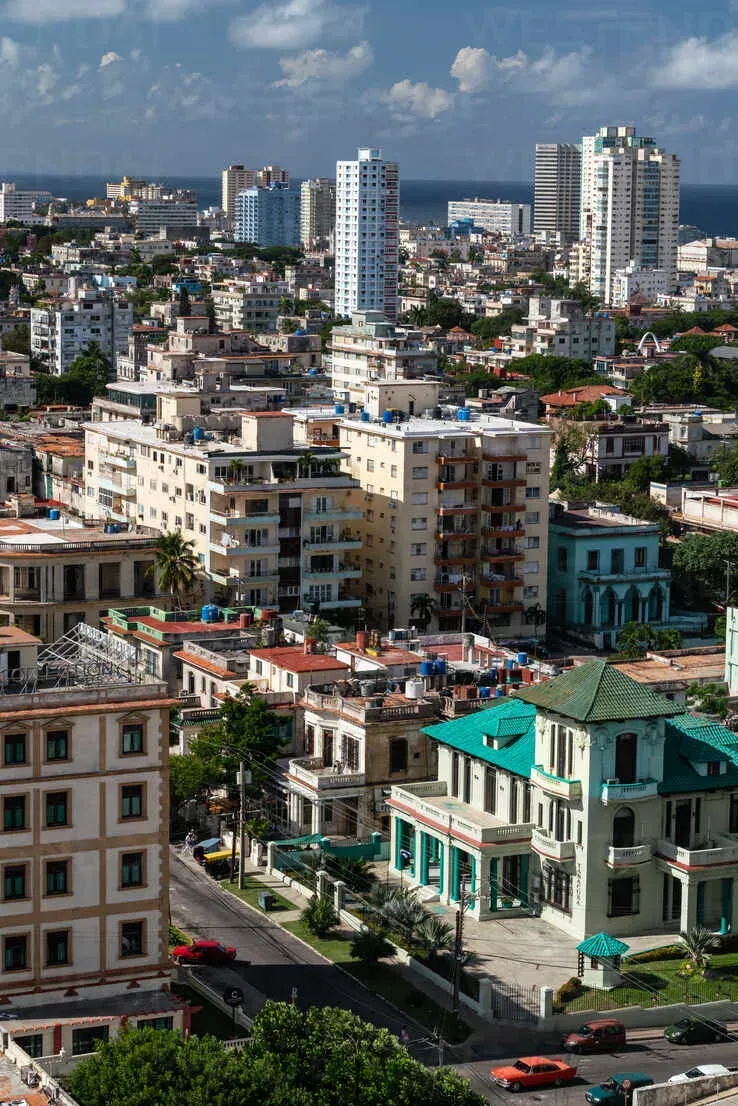
Havana skyline with modern buildings and ocean view

Tourism and Hospitality


Tourism represents the investment opportunity with the shortest activation timeline in a free-market Cuba. When the American tourist market opens fully to the island, the resulting demand surge will be immediate and massive. No Caribbean destination combines Cuba's coastline, colonial architecture, cultural richness, and proximity to the US market in a single package. Several billion dollars in additional annual tourism spending will transform Cuba's hospitality economy almost overnight. Investors already positioned in this landscape will not be chasing the opportunity. They will be owning it.


Real Estate and Property Development


A free-market Cuba will trigger a real estate repricing story unlike anything the Caribbean has ever produced. When private ownership and free-market conditions take hold, Cuban property values will move from prices reflecting decades of suppression to prices reflecting genuine capitalist demand. Coastal resort development, luxury residential communities, Havana commercial real estate, and urban mixed-use projects will all compete for capital simultaneously. The appreciation curve that follows will reward early-positioned investors with returns that late movers will study but never replicate.


Renewable Energy


Cuba's free-market energy future will be built on renewable foundations. Solar, wind, and bioenergy capacity will need to expand dramatically to power a modernizing capitalist economy. American clean energy companies operating at the frontier of solar deployment, wind technology, and grid-scale battery storage are positioned to lead this transformation. International climate finance frameworks will reduce early-mover risk and accelerate deployment timelines, making renewable energy one of the most strategically powerful positions an investor can establish before Cuba's transition arrives.


Agriculture and Trade


The natural alignment between American agricultural expertise and Cuba's future food economy creates one of the most commercially significant bilateral trade relationships in the entire hemisphere. Geographic proximity, established trade preferences, and complementary production capacities all favor American companies over every competitor. Investors who position for processing partnerships, precision agriculture technology, and supply chain infrastructure will find a market where decades of underinvestment have created demand that rewards early and serious engagement exponentially.


Technology and Infrastructure


A free-market Cuba will build its entire digital economy and physical infrastructure from the ground up at modern standards. American technology companies and infrastructure developers hold natural competitive advantages in speed, proximity, and market access that no competitor from Asia or Europe can match. The companies that map this landscape before the acceleration begins will shape the architecture of Cuba's entire economic future.


Preparation Is the Only Advantage That Cannot Be Copied


Every transformational market opening in history has delivered the same verdict. Those who prepared early captured the foundational assets. Those who waited for certainty inherited the terms that early movers set.

Eastern Europe after 1989. Vietnam after normalization. The pattern never changes and Cuba's free-market transformation will be no different.


American investors carry the greatest natural advantage of any competitor in Cuba's free-market future. But natural advantage only pays off for investors who prepare before the moment arrives.

Preparation is not speculation. It is the only strategy that determines outcomes when transformational markets open.


Cuba's free-market future is being shaped right now. Every sector mapped today becomes an advantage that compounds when the market opens. Every opportunity identified before the transition represents positioning that cannot be replicated once the acceleration begins.


American investors hold the most powerful first-mover position in Caribbean history. The only question is whether you will be ready when the moment arrives.


Investors exploring early positioning in Cuba's free-market future should begin mapping opportunities across tourism, real estate, energy, agriculture, and technology before the transformation accelerates, or reach out to discuss your investment strategy with experts who understand the landscape.


About the Author

Camilo Jaime
Camilo Jaime • March 20, 2026

This is paragraph text. Click it or hit the Manage Text button to change the font, color, size, format, and more. To set up site-wide paragraph and title styles, go to Site Theme.

Camilo Jaime is the founder of Cuba Strategic Partners and has spent over five years assembling one of the most comprehensive private collections of Cuba-centric domain assets ever compiled. A Miami-based entrepreneur with deep ties to the Cuban-American community, Camilo built this portfolio with a single conviction: Cuba will be free, and the digital infrastructure of that free Cuba should be built now, before the physical economy opens. Cuba Strategic Partners does not engage with the current regime under any structure. Every asset in this portfolio is positioned exclusively for a free Cuba.

Cuba Strategic Partners

Explore premium domain opportunities and strategic partnerships tailored for growth in emerging markets.

Request a Domain Investment Consultation

Contact Us

You Might Also Like

By Camilo Jaime March 17, 2026
When it comes to SEO, there isn't a magic formula to instantly send your site off to the #1 search result on Google. But there are some basic principles you should follow for a wonderful starting point. Here are the top 5 SEO practices to start with: #1 Write for people, not for search engines Always write original, interesting, high quality site content that's error free and relevant to your site. Search engines like Google can easily detect content that is duplicated from elsewhere online, that contains grammatical errors, or that is stuffed with keywords. #2 Add a blog to your site and use rich media To engage your site visitors and blog readers, create posts that include non-textual media like photos, videos, or original visualizations (infographics). Having that extra content (especially if it's captivating) will increase the time users spend on your site as well as the likelihood they will share your site with their own community. #3 Offer a positive user experience throughout your site Google will know if you're using your site to aggressively advertise your service, or if you're being too pushy. Always aim to offer site visitors a pleasant experience on your site. That means clear content, support when needed, and always an option to go back. #4 Create a network of internal links (but don't overdo it) Add links between different pages of your site and your blog, but try to follow a process that feels organic rather than heavy linking meant just for search engine crawlers. Link between pages that make sense, for example, on your services page, link a certain industry specific term, and link it to a blog post you wrote about it, that gives more information on that term. #5 Always check your site's Core Web Vitals Core Web Vitals are a standard site performance standard initially created by Google. The report shows site owners how their site pages perform 'for real,' how long it takes for site visitors to load site pages, and it offers ways to fix issues, if there are any.